
Key summary points:
- Family history is one of the strongest predictors of hypertension, even in healthy, active patients.
- Inherited risk should lower the threshold for earlier blood pressure screening and 24-hour monitoring.
- Diagnosing one patient is an opportunity to identify and protect the entire family.
Genetics is one factor among many that increases a person’s risk for hypertension. For many people, though, and especially for women, it’s underestimated for earlier diagnosis.
Here’s a scenario that’s all too common for patients with a healthy lifestyle:
A woman in her 40s with a normal body mass index reports eating a healthy, mostly plant-based diet and exercising regularly. Despite a family history of cardiovascular disease, her doctor assumes her slightly elevated office blood pressure reading is simply a result of white-coat syndrome or stress.
Family history remains one of the strongest predictors of hypertension
For many physicians, a patient with a healthy lifestyle and no history of smoking can be a clinical blind spot for hypertension screening, particularly in adults under 50. While it’s true that lifestyle choices lower the risk of hypertension, patients can’t outrun their genes. A strong family history of hypertension is one of the most important predictors of hypertension, even when someone appears healthy.
Having one parent or grandparent diagnosed with hypertension significantly raises the risk of inheriting the condition.
- Studies suggest that 35% to 50% of a person’s risk of developing hypertension is influenced by inherited genes.
- A study of parents and offspring in Korea found the risk of hypertension was approximately 2xs higher when one parent was hypertensive and over 4x higher when both parents were hypertensive.
Asking patients about their family history of hypertension and then giving the genetic risk of hypertension more weight in clinical decision-making can help physicians diagnose hypertension earlier.
Overlooking the genetic risk of hypertension contributes to the ‘silent killer’
Hypertension is one of the leading causes of cardiovascular disease worldwide, affecting 48% of U.S. adults, but it often goes undiagnosed. Roughly 41% of women and 51% of men with hypertension (around 580 million people worldwide) are unaware they have hypertension.
While lifestyle plays a critical role in reducing the risk of high blood pressure, hypertension is polygenic. There are hundreds of genetic loci associated with blood pressure regulation. Rather than a single “hypertension gene,” most patients inherit numerous small genetic variants that can each affect blood pressure through vascular function, renal sodium handling, hormone regulation and arterial stiffness.
Even having a grandparent with high blood pressure raises the risk of hypertension. In a study across three generations, early-onset hypertension in grandparents raised the risk for hypertension in grandchildren.
How genetics should affect clinical decision-making
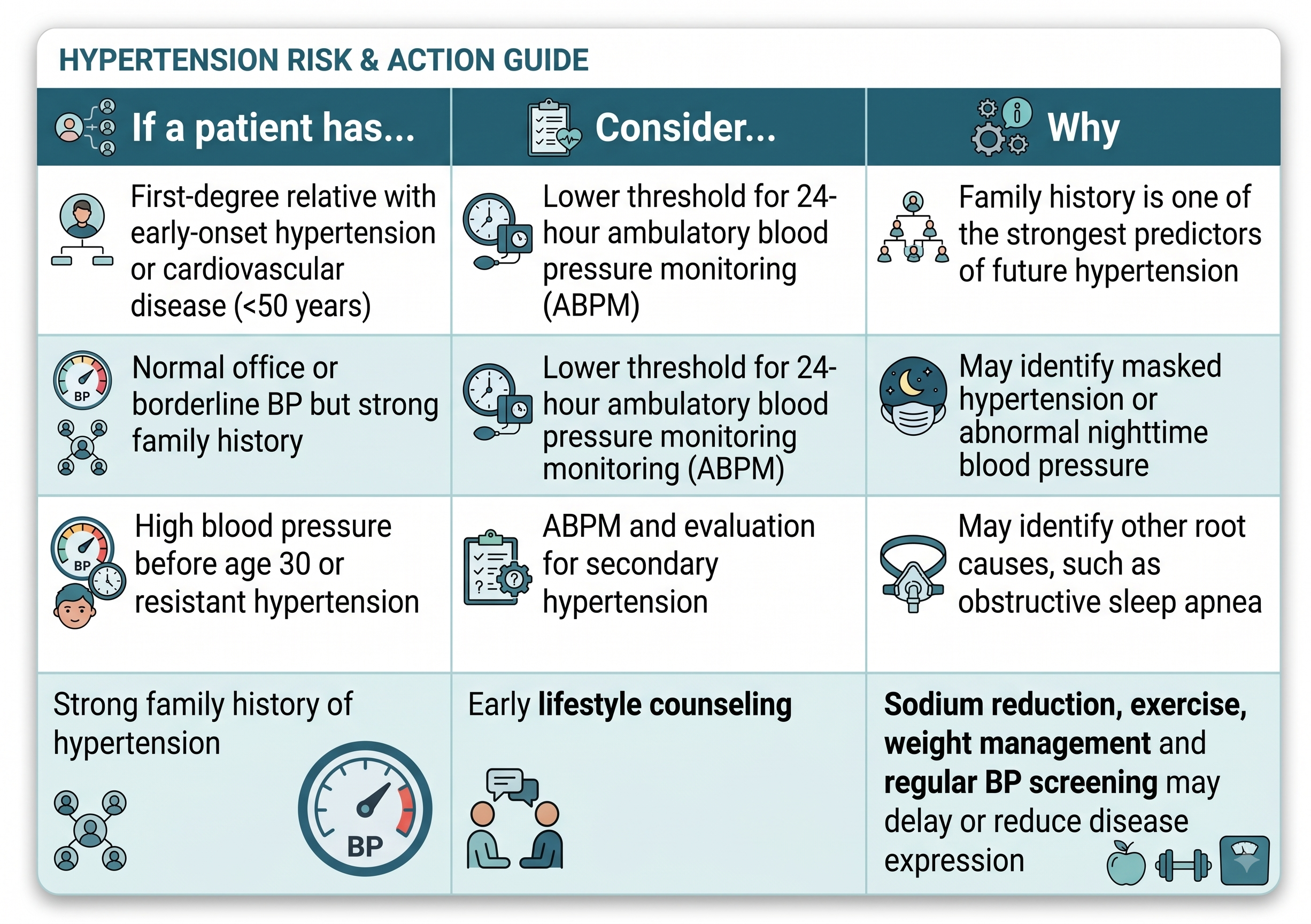
Asking patients about their family history of hypertension is a reason to consider lowering the threshold of who should access ambulatory blood pressure monitoring (ABPM) screening, helping doctors diagnose hypertension earlier.
Every hypertension diagnosis is an opportunity for prevention
Diagnosing hypertension in one patient may reveal risk throughout an entire family. When a parent is diagnosed with hypertension, physicians have a genetic counseling opportunity to encourage conversations that extend beyond that individual. Adult children should be informed of their risk and establish routine primary care and more frequent blood pressure screening.
Younger adults with a first-degree relative affected by hypertension or premature cardiovascular disease should be encouraged to adopt healthy habits, including limiting sodium intake. This and other factors like exercising, eating healthy and avoiding tobacco use may delay or reduce the development of hypertension.
Family history should prompt physicians to maintain a lower threshold for routine blood pressure assessment and to provide closer follow-up in patients with significant inherited risk, consistent with current clinical judgment and applicable guidelines.
Why genetic risk might not lead to screening
While blood pressure is dynamic, most patients only ever undergo blood pressure spot checks in the clinic. This is comparable to trying to understand a story based on a photographer, rather than a whole movie.
Limitations of traditional ABPM testing are part of why so few patients undergo this gold-standard screening test. Most clinics have a very limited number of traditional arm cuffs, which come with significant administrative burden and are very uncomfortable for patients. Only a small proportion of eligible patients currently undergo 24-hour monitoring despite its recognized clinical value.
Spot checks and even blood pressure monitoring at home can miss masked hypertension and don’t account for nighttime dipping and morning surge. Nocturnal patterns are clinically important because nighttime blood pressure and the normal overnight “dip” are associated with cardiovascular outcomes.
New clinically validated and FDA-cleared cuffless monitoring technology from Biobeat reduces these barriers. By making comprehensive blood pressure assessment more practical, Biobeat can help physicians screen patients whose family history suggests an increased risk of hypertension before conventional signs appear.

Earlier diagnosis starts with family history
Healthy behaviors remain the cornerstone of cardiovascular prevention, but lifestyle should never become a reason to underestimate the genetic risk of hypertension.
When family history and appearance tell different stories, Biobeat allows physicians to give genetics the attention it deserves. Earlier conversations, earlier screening and a more complete understanding of blood pressure over 24 hours may help identify hypertension before silent vascular damage occurs.
Click here to schedule a quick Biobeat demo.