
Why you shouldn’t settle for spot readings when you can have semi-continuous data through ABPM
Key Summary Points:
- Spot readings lead to misclassification: White-coat hypertension and masked hypertension leave up to one-third of patients misdiagnosed. Clinic readings can significantly overestimate BP, while masked hypertension affects about 1 in 8 adults, increasing cardiovascular risk without detection.
- ABPM is the diagnostic gold standard: ACC/AHA guidelines recognize 24-hour ABPM as the gold standard because it captures full circadian data (daytime and nighttime averages, dipping status and morning surge), providing the only reliable way to distinguish true hypertension from white-coat or masked patterns.
- The challenge is scalability, not evidence: Despite its clinical value, traditional cuff-based ABPM is underused due to workflow burden, limited devices and patient discomfort. Expanding access to scalable, patient-friendly 24-hour monitoring is essential to closing the hypertension diagnosis gap.
- Cuffless ABPM offers more accurate readings: With Biobeat’s evidence-based cuffless blood pressure monitoring device, providers get a more accurate 24 hr blood pressure measurement that isn’t influenced by patients’ discomfort during readings or even by their awareness of the measurement.
During American Heart Month 2026, actor and director Aisha Tyler joined forces with the Hypertension Control Alliance to raise awareness about hypertension by launching Hypertension Bites. Educating the public about the condition’s signs and treatment is an essential step to controlling hypertension, but it only goes so far to address the diagnosis challenge for millions of people with uncontrolled hypertension: white-coat hypertension and masked hypertension.
While hypertension remains one of the most common cardiovascular conditions worldwide, physicians still struggle with the most basic step of accurately diagnosing it. Spot blood pressure readings remain the default in many practices, but blood pressure is dynamic. The only way to assess BP during sleep is ABPM.
Relying on in-office measurements alone doesn’t capture how sleep, stress, activity, medication and moods all affect blood pressure. In a single reading with a blood pressure cuff, many patients can have either a higher or a lower reading, depending on how they react to the cuff itself. Some patients restrain their blood pressure when they’re aware of the BP measurement, which masks their hypertension. Others get nervous or react to the cuff’s discomfort, which can appear as white-coat hypertension.
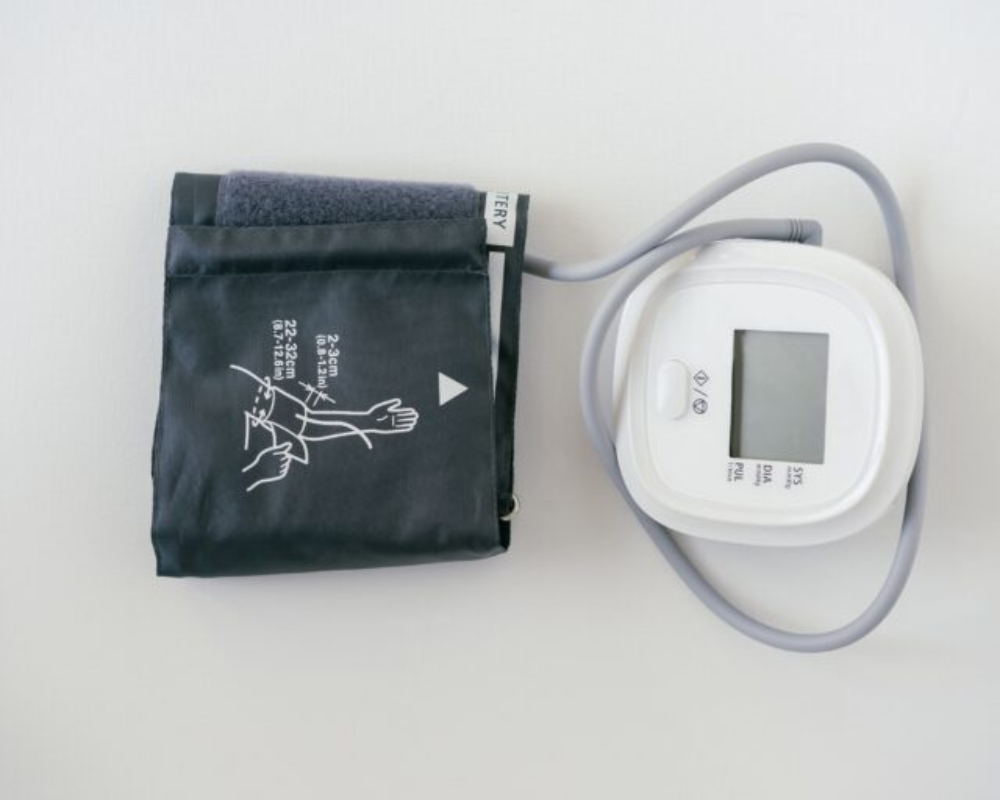
In clinic readings:
- White coat syndrome: 20% of results are significantly higher due to awareness or cuff inflation-induced pain, which increases blood pressure (https://pmc.ncbi.nlm.nih.gov/articles/PMC4262763)
- Masked hypertension: 15% of cases are patients with high blood pressure at night that’s not apparent in the day(https://pmc.ncbi.nlm.nih.gov/articles/PMC3652723/#T5)
Biobeat’s cuffless device accurately measures average blood pressure over 24 hours, without being skewed by patients’ awareness of the 15-minute measurements.
ABPM is the gold standard for addressing white-coat hypertension and masked hypertension
Ambulatory blood pressure monitoring (ABPM) with a 24-hour monitoring cuff automatically measures blood pressure every 15 to 30 minutes during the day and night. The American College of Cardiology/American Heart Association 2017 Hypertension Guidelines recommend ABPM as the gold standard for confirming hypertension. Only with 24-hour averages can physicians accurately and confidently diagnose hypertension without concern of white-coat hypertension and masked hypertension.
ABPM completed over 24 hours addresses gaps in physician office readings by capturing the following:
- Full circadian cycle
- Daytime average
- Nighttime average
- Total 24-hour average
- Dipping vs. non-dipping status
- Morning surge
Without ABPM, one-third of patients remain misclassified. This is due to either white-coat hypertension or masked hypertension.
White-coat hypertension
Every physician is aware of white-coat hypertension among patients whose blood pressure is elevated in the clinical setting. In some cases, patients can be misdiagnosed as hypertensive when their blood pressure is actually normal outside the clinical setting.
Studies confirm the sympathetic activation triggered by a medical environment. Anxiety can raise systolic blood pressure, as well as the cuff inflation itself. The combination of anxiety and mechanical inflation means office readings may significantly overestimate true pressure by 11–20 mmHg in some patients.
Without ABPM, there’s no reliable way to distinguish between hypertension and an office reading affected by stress or other factors.
Masked hypertension
The inverse phenomenon, masked hypertension (MHT), also leads to lower diagnosis rates. Common drivers of masked hypertension include:
- Work-related stress
- Physical activity
- Morning surge
- Nocturnal hypertension
Masked hypertension is strongly associated with target-organ damage and increased cardiovascular morbidity. A study in the American Journal of Epidemiology estimated 12.3% of the U.S. adult population in 2005–2010 had MHT. That’s one out of every eight adults who remain unaware of a condition that leads to strokes, kidney disease, heart failure and death.
Without ABPM, relying on office readings only means hypertension remains invisible for many.
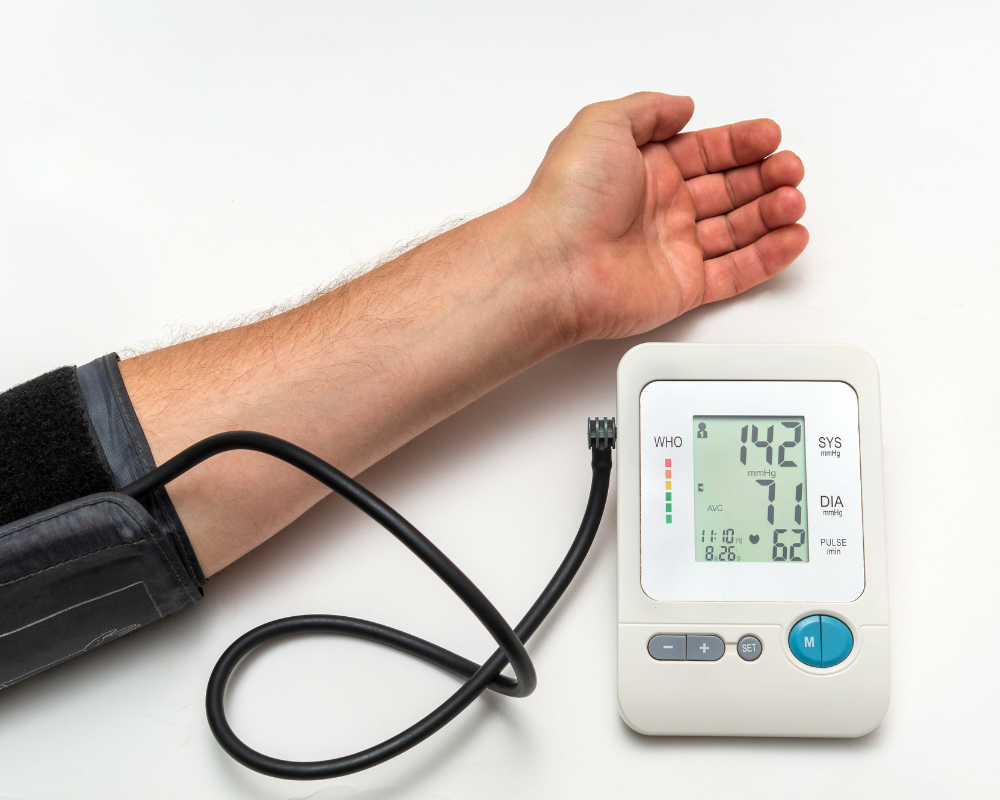
Limitations of office and home monitoring
Office blood pressure is a single-point measurement that doesn’t take into account any of the following variables that can affect any single blood pressure reading:
- Variability between arms
- White-coat effect
- Cuff-induced elevation
- Nocturnal data
Most importantly, office readings don’t reflect 24-hour averages that capture the ways blood pressure naturally fluctuates.
Meanwhile, home monitoring offers more sampling frequency, but it still has significant limitations, including:
- No reliable nighttime assessment
- Variable patient adherence
- No standardized averaging comparable to ABPM
Without ABPM, white-coat and masked hypertension remain undetected, leaving treatment decisions to be based on incomplete data.
Why ABPM is still underused
Despite its clinical importance, traditional cuff-based ABPM presents significant practical barriers, leaving many patients at risk of undiagnosed and uncontrolled hypertension.
Most physician offices have limited ABPMs – too few for a condition that affects nearly half the U.S. adult population. The devices themselves are uncomfortable and even cumbersome for patients:
- Device inflation every 15-30 minutes
- Sleep disturbance
- Pain and discomfort
- Behavioral modification during measurement, such as pausing or bracing for discomfort
- Multiple office visits
It’s especially common for patients to fail to complete nighttime measurements, skewing the 24-hour average.
Besides the patient burden, ABPM requires office staff to spend significant time setting up patients with the device, entering data, replacing batteries for each use and cleaning each device and cuff after use. As a result, ABPM remains underutilized, often reserved for a small subset of patients rather than a routine diagnostic tool.
Cuffless, wearable ABPM is key to overcoming white-coat and masked hypertension
Biobeat’s cuffless 24-hr blood pressure monitoring technology is the only FDA-cleared device on the market that eliminates operational friction and makes gold-standard screening scalable.
Patients apply the semi-continuous, non-invasive, wearable monitoring device to their device and then can completely forget their wearing it. They don’t feel the pressure of a cuff reading, so they don’t react during any readings.

This allows:
- Real-world blood pressure phenotyping
- Higher compliance
- Reduced sleep disturbance
- Scalable testing for diagnosis and treatment monitoring across larger patient populations
Validation data in intensive care settings, including comparisons with arterial line monitoring, demonstrate strong correlations for systolic, diastolic and heart rate measurements across diverse patient populations and skin tones.
An ambulatory validation study comparing cuffless wearable monitoring with traditional ABPM shows close alignment of daytime, nighttime and 24-hour averages.
The device doesn’t replace ABPM. It modernizes how we deliver it.
To schedule a demo of how Biobeat works or to learn more about how Biobeat’s cuffless Blood Pressure monitors can help improve HTN diagnostics and treatment, contact: info@bio-beat.com.
References
- Biobeat. (n.d.). Blood Pressure Monitoring (BPM) solution. https://www.bio-beat.com/bpm/
- CDC Foundation. (2026). Hypertension Bites: Blood Pressure Control Campaign. https://www.cdcfoundation.org/pr/2026/Hypertension-Bites-Blood-Pressure-Control-Campaign
- Ling, T., et al. (2014). The use of ambulatory blood pressure monitoring among Medicare beneficiaries in 2007–2010. PubMed Central. https://pmc.ncbi.nlm.nih.gov/articles/PMC4262763/
- Stergiou, G. S., et al. (2018). Home and ambulatory blood pressure monitoring in hypertension. PubMed Central. https://pmc.ncbi.nlm.nih.gov/articles/PMC3652723/
- Whelton, P. K., et al. (2018). 2017 ACC/AHA guideline for high blood pressure in adults. Hypertension. https://www.ahajournals.org/doi/10.1161/hyp.0000000000000065
- Myers, M. G., et al. (2018). Ambulatory blood pressure monitoring and clinical outcomes. PubMed Central. https://pmc.ncbi.nlm.nih.gov/articles/PMC5860080/
- Biobeat Technologies Ltd. (2024). Validation study: cuffless photoplethysmography-based continuous blood pressure monitoring after cardiac surgery. https://22613823.fs1.hubspotusercontent-na1.net/hubfs/22613823/Biobeat%20cuffless%20blood%20pressure%20VsPerformance%20of%20a%20cuffless%20photoplethysmography-based%20device%20for%20continuous%20monitoring%20of%20blood%20pressure%20after%20cardiac%20surgery:%20a%20preliminary%20validation%20study.pdf
- PLOS ONE. (2023). Cuffless blood pressure monitoring study (journal article). https://22613823.fs1.hubspotusercontent-na1.net/hubfs/22613823/journal.pone.0336961.pdf