
How Nurses Improve Hypertension Diagnosis Accuracy
With new blood pressure guidelines from the AHA/ACC, nurses are at the forefront of helping to screen the increasing percentage of adults with hypertension. According to the AHA/ACC Guideline for the Prevention, Detection, Evaluation, and Management of High Blood Pressure in Adults, hypertension is now defined as systolic blood pressure greater than 130 mm Hg or diastolic blood pressure greater than 80 mm Hg.
This lower bar is key to screening people earlier and preventing morbidity and mortality from cardiovascular disease. Accurately measuring blood pressure is the first step in identifying who is at risk for hypertension.
Nurses are often the first clinicians to measure blood pressure, making them essential to identifying patients who may need ambulatory blood pressure monitoring (ABPM). A 2022 nursing call to action argues that nurses across clinical, academic, quality improvement and professional settings play a critical role in improving hypertension care.
The reality, though, is that workflow pressures, staffing rotations and inconsistent training can unintentionally compromise measurement accuracy.
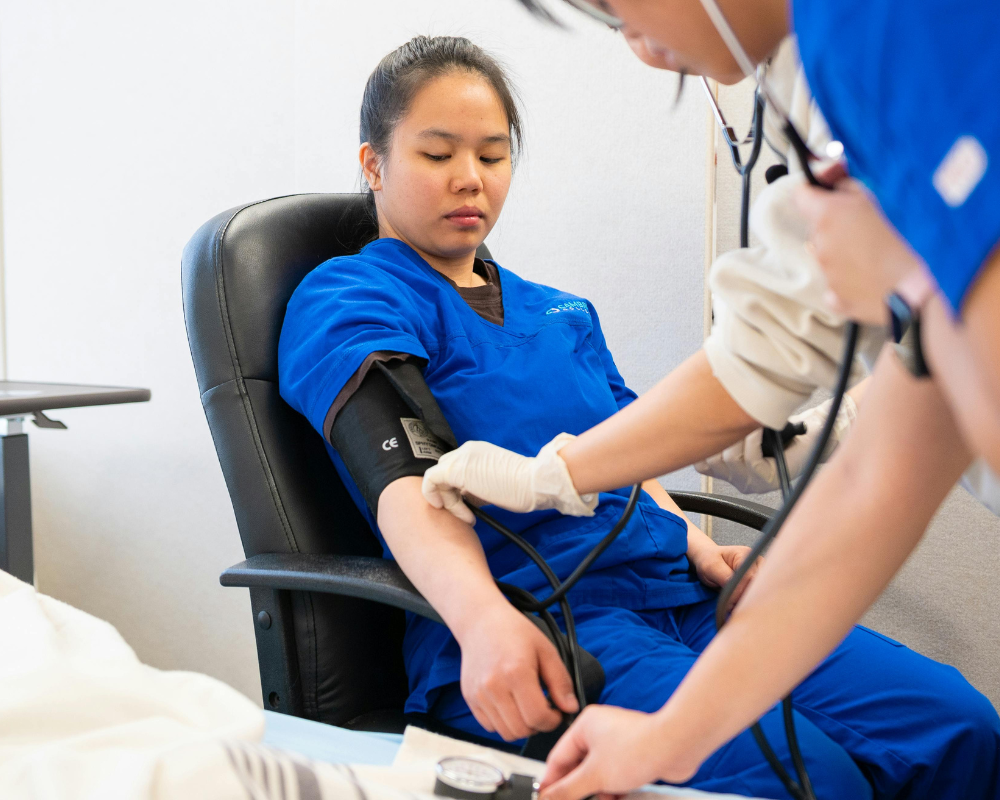
Proper blood pressure technique is the first step in hypertension screening
While ABPM is the gold standard for diagnosing hypertension, a clinic blood pressure reading is typically the first step in identifying which patients require further screening. Plus, in many healthcare clinics that aren’t using Biobeat’s Cuffless BP Monitoring devices, most patients never access 24-hour ABPM testing.
Incorrectly measuring blood pressure can lead to missed hypertension, delayed treatment, or inappropriate reassurance that a patient simply has white coat syndrome. In some cases, an incorrect reading can even lead to overtreatment.
Nurses play a critical role in ensuring the first reading is reliable enough to guide the next steps. Key practices include:
Allow the patient to rest first
Patients should sit quietly for at least five minutes before measurement. Walking, stress or rushing into the appointment can all affect BP reading.
Don’t talk
For busy nurse, it’s tempting to continue intake questions while checking vitals, but patients should remain silent. Talking can raise blood pressure values.
Correct positioning
Small positioning issues can meaningfully alter readings. Patients should:
- Sit upright with the patient’s back supported
- Keep both feet flat on the floor
- Avoid crossing legs
- Rest their arm at heart level
- Use the same arm for measurement
Repeat elevated readings
If a reading is high, it should be repeated after a few minutes rather than dismissed as anxiety.
Common workflow habits unintentionally affect readings
Nurses typically know how to measure blood pressure properly, but today’s widespread nursing shortage in the United States makes it difficult to follow blood pressure measurement guidelines. The Bureau of Labor Statistics (BLS) projects an annual shortage of 189,100 nurses until 2034.
Staffing shortages leave nurses with limited time to follow traditional guidelines for office-based BP measurement, which can take nearly 10 minutes. It also means there’s a rotating nursing staff, which makes it harder to reinforce proper protocols for blood pressure measurement.
A blood pressure clinic spot check often looks more like this:
- Taking blood pressure immediately after the patient walks into the exam room
- Measuring while simultaneously asking intake or history questions
- Allowing the patient to talk during the reading
- Measuring while the patient’s feet are dangling or legs are crossed
- Recording one elevated reading without repeating it
- Assuming elevated readings are only anxiety-related
Miscuffing is a common error, even among the most experienced nurses. BP will be falsely elevated if the cuff is too small and falsely low if it’s too large.
Each of the above realities can distort results, limiting doctors’ ability to identify patients who require further evaluation.
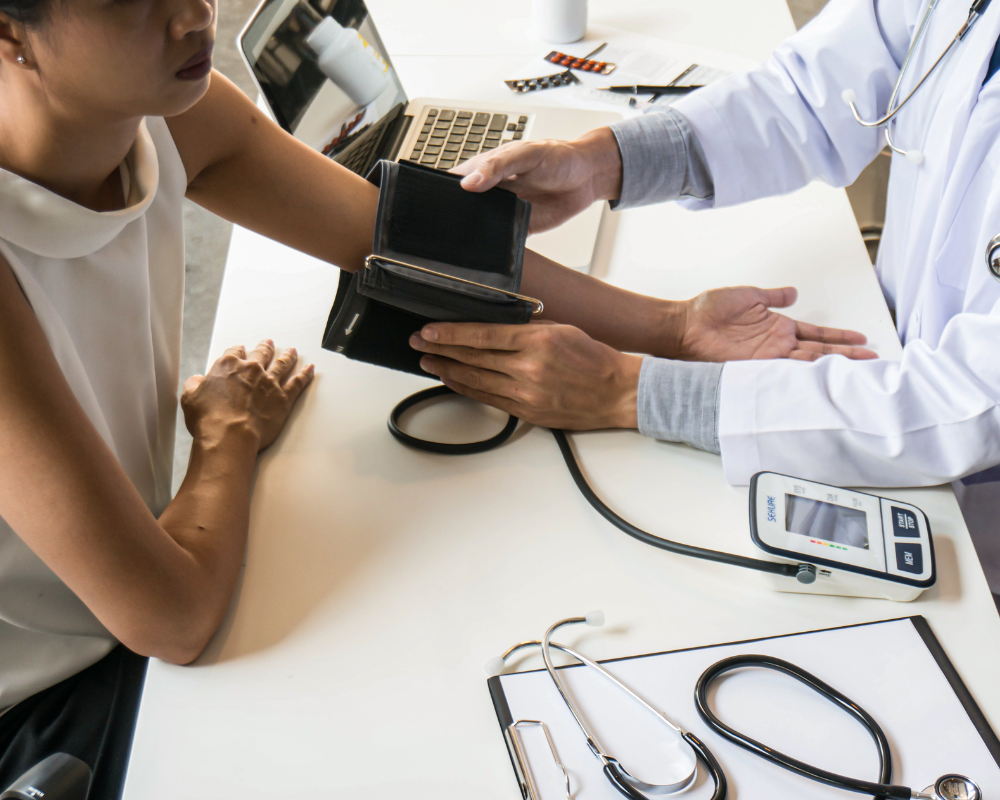
Building a culture of measurement accuracy
Health systems that want to improve hypertension outcomes should consider blood pressure measurement training as an ongoing clinical competency. A 2026 hypertension review proposes a more streamlined approach: repeat the first screening measurement when it’s 130/80 mm Hg or higher, while ensuring to follow the steps that matter most:
- Proper cuff size
- Arm support
- Patient positioning
In addition, the following can help ensure all rotating nurses follow clinical protocols:
- Standardize blood pressure workflows across departments
- Annual blood pressure measurement training
- Post visual reminders in exam rooms
- Encourage repeat measurements for elevated readings
- Create clear pathways for ABPM referrals
Biobeat’s cuffless blood pressure monitor can help doctors redefine how they diagnose patients with hypertension, but only if those patients are initially flagged for screening. Nurses are the clinicians who are best positioned to identify when a routine vital sign is a red flag for possible high blood pressure.
When nurses measure BP accurately and recognize when office values require further investigation, they help more patients receive the ABPM screening needed for a hypertension diagnosis.
To schedule a demo of how Biobeat works or to learn more about how Biobeat’s cuffless Blood Pressure monitors can help improve HTN diagnostics and treatment, contact: info@bio-beat.com.
References
- Whelton, P. K., et al. (2025). 2025 AHA/ACC/AANP/AAPA/ABC/ACCP/ACPM/AGS/AMA/ASPC/NMA/PCNA/SGIM Guideline for the Prevention, Detection, Evaluation and Management of High Blood Pressure in Adults. American Heart Association Journals. https://www.ahajournals.org/doi/10.1161/CIR.0000000000001356
- Juraschek, S. P., et al. (2022). Association of orthostatic hypotension with cardiovascular outcomes in adults with hypertension. Hypertension. https://pubmed.ncbi.nlm.nih.gov/35137506/
- Biobeat. (n.d.). Blood pressure monitoring (BPM) solution. https://www.bio-beat.com/bpm/
- Biobeat. (n.d.). Challenges and limitations of ambulatory blood pressure monitoring for hypertension. https://www.bio-beat.com/article/challenges-and-limitations-of-abpm-for-hypertension/
- Biobeat. (n.d.). White coat hypertension vs masked hypertension: why ABPM is the gold standard. https://www.bio-beat.com/article/white-coat-hypertension-vs-masked-hypertension-why-abpm-is-the-gold-standard/
- Rosendorff, C., et al. (2024). [Article]. The American Journal of Medicine. https://www.amjmed.com/article/S0002-9343(24)00541-2/fulltext
- U.S. Bureau of Labor Statistics. (n.d.). Occupational Employment and Wage Statistics tables. https://www.bls.gov/oes/tables.htm