Both hypertension and chronic kidney disease (CKD) are commonly called “silent killers” because they each tend to be diagnosed only once the disease is well underway and even irreversible. To make matters worse, each disease process contributes to the other, resulting in hypertensive kidney disease.
For cardiologists and nephrologists managing hypertensive renal disease, this raises a critical question of whether we’re seeing the full picture when measuring blood pressure or are relying too heavily on snapshot readings.
A growing body of evidence suggests the latter.
Why the risk of kidney damage is often underestimated
While physicians are aware that chronic kidney disease and hypertension are tightly linked, signs of early kidney disease are frequently missed in daily practice. There’s a vicious cycle where:
- Elevated blood pressure is a leading cause of kidney damage
- Impaired kidney function worsens blood pressure control
Part of the challenge lies in how blood pressure is measured. Although providers know blood pressure isn’t static, we often measure it in the clinic as if it were. Blood pressure fluctuates throughout the day and night and is influenced by daily activities. A spot reading represents a small slice of the story.
Of course, measuring blood pressure to diagnose hypertension is most accurate with a 24-hour ambulatory blood pressure measurement ambulatory blood pressure monitoring (ABPM), the gold standard. However, studies show real-world access is limited.
Relying on isolated office readings risks overlooking patterns that directly contribute to kidney damage. In a study of patients with hypertension and CKD stages 2–4, ambulatory blood pressure monitoring (ABPM) (and nighttime BP measurement, in particular) allowed more accurate prediction of renal and cardiovascular risk, while office BP measurements didn’t predict any outcomes.
Hypertensive renal disease on the rise
Hypertension-related chronic kidney disease is increasing globally.
In the United States, the death rate from hypertensive kidney disease increased by 48% over the past 25 years, with continued differences across demographic groups, according to preliminary findings of a study presented at the American Heart Association’s scientific meetings in September 2025. Investigators examined national data on hypertensive kidney disease deaths across all states and major demographic groups.
Controlling the disease requires not only better treatment but also improved diagnosis.
Missed hypertension diagnosis can lead to kidney damage
A growing body of evidence shows that clinic blood pressure readings often fail to reflect patients’ hypertension true risk. Large-scale population studies, like this 2023 study in The Lancet, indicate ambulatory and nighttime blood pressure measurements are more strongly associated with negative outcomes than clinic readings alone. In particular, nocturnal hypertension and masked hypertension have been linked to increased mortality.
When hypertension isn’t diagnosed or controlled, high blood pressure increases pressure within the kidneys’ delicate network of blood vessels. Over time, this can lead to structural damage and eventual CKD.
Kidney damage, in turn, also exacerbates hypertension. As renal function declines, the body’s ability to regulate fluid balance and blood pressure becomes impaired.
What makes these intertangled diseases particularly dangerous is their silence. Hypertension can lead to cardiovascular events, organ damage and death when it goes undetected and uncontrolled. With CKD, patients often remain asymptomatic until significant function is lost.
How improving ambulatory blood pressure monitoring (ABPM) can reduce kidney disease
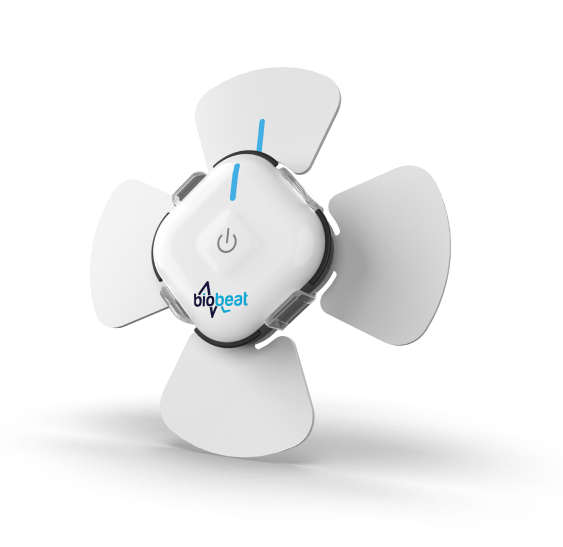
Treating hypertension and preventing the eventual negative outcomes the condition can cause, such as chronic kidney disease, starts with better diagnosis. This means improving patient access to ABPM with a scalable solution like Biobeat, an FDA-cleared cuffless device.
Biobeat captures 24-hour averages across the full circadian cycle. Rather than wear a traditional cuff-based ambulatory blood pressure monitoring (ABPM), which is uncomfortable and tedious, patients simply apply the Biobeat device to their chest for a day while continuing their daily activities. The ability to “set it and forget it” means results aren’t skewed by masked hypertension or white coat hypertension.
Cuffless ambulatory blood pressure monitoring (ABPM) removes barriers like device access and cuff discomfort that directly affect data and clinical decision-making.
Improving treatment insights
Scaling access to ambulatory blood pressure monitoring (ABPM) not only improves diagnosis. It also guides treatment by allowing providers to assess how patients respond to therapy.
With Biobeat, physicians can:
- Identify high-risk patterns earlier
- Detect morning surges
- Evaluate nocturnal dipping
- Tailor therapy to individual patient needs
- Reduce long-term complications, including kidney disease
Because kidney damage develops gradually, early detection is critical. Missing subtle but consistent BP elevations or treatment that needs adjustment means missing opportunities for intervention before irreversible damage occurs.
Rethinking blood pressure monitoring for kidney protection
Hypertension management is a cornerstone of kidney health, so improving measurement accuracy must be every provider’s clinical priority.
With Biobeat, providers can access:
- 24-hour, real-world measurements
- Reliable nocturnal readings
- Minimal to no disruption to patient behavior
With cuffless BP monitoring that leads to better diagnosis and management, nephrologists, cardiologists and primary care providers can address growing rates of hypertension and hypertensive kidney disease as well.
Schedule a demo to see how Biobeat’s cuffless ambulatory blood pressure monitoring (ABPM) can transform your approach to hypertension management.
Patients’ frequently asked questions about chronic kidney disease and hypertension
Q: What’s the role of the kidneys in hypertension?
The kidneys play a central role in regulating blood pressure by controlling fluid balance, sodium levels and hormone systems such as the renin-angiotensin-aldosterone system (RAAS).
Q: How can kidney problems cause high blood pressure?
Damaged kidneys lose their ability to effectively regulate fluid and sodium, leading to volume overload. They also activate hormonal pathways, such as the RAAS system, which constrict blood vessels and raise blood pressure. This creates a feedback loop where kidney dysfunction and hypertension contribute to one another.
Q: What are the early signs of renal hypertension?
Early signs hypertensive kidney disease tend to be subtle or absent, which is why it’s called a silent killer. When present, they may include:
- Mild elevations in blood pressure, especially resistant or variable readings
- Excess protein in the urine
- Slight decline in kidney function
Because symptoms are minimal, early detection often depends on accurate blood pressure monitoring and a urine test.
Q: How can lowering blood pressure improve kidney function?
Lowering blood pressure reduces stress on all organs, including the kidneys. Controlling blood pressure slows damage to the kidneys’ blood vessels and nephrons (the structures that clean the blood), preserving kidney function over time.
At what point can the kidneys fail due to high blood pressure?
Kidney failure can occur after years of uncontrolled hypertension. The exact timeline varies for each patient, but earlier detection and consistent BP control significantly reduce the risk of kidney failure.